

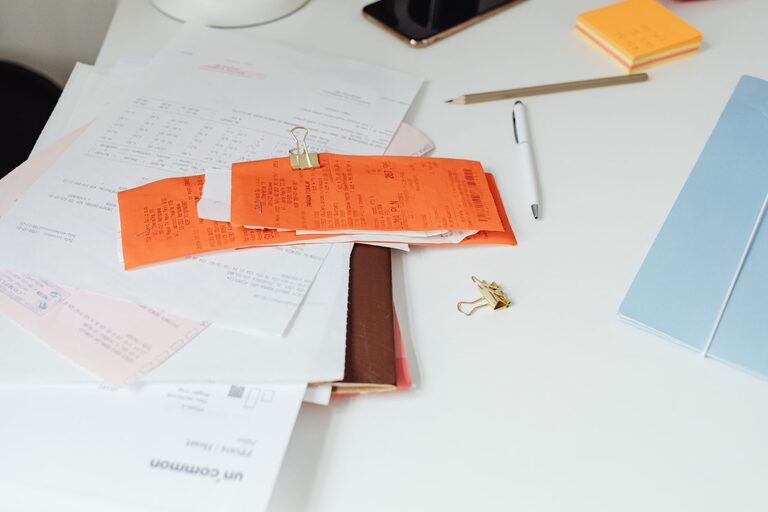
Paper clutter can build up quietly. A few letters on the kitchen counter, receipts in a drawer, school notices on the fridge, and manuals in a cabinet can quickly become a difficult-to-manage pile. The good news is that you do not need a complicated system to take control.
With a short sorting session and a few simple habits, you can reduce paper, protect important documents, and make everyday paperwork easier to manage.
Start With a Quick Collection
Before deciding what to keep, gather paper from around your home. Check common trouble spots, including:
– Kitchen counters and drawers
– Entryway tables
– Home office desks
– Mailboxes and bags
– Refrigerator doors
– Junk drawers
– Filing cabinets
– Bags, backpacks, and car compartments
Place everything in one central location, such as a table or clear area of the floor. Seeing the full amount of paper can make the task feel more organized and helps prevent you from sorting the same items more than once.
You do not need to complete the entire home in one day. If the pile feels overwhelming, begin with one surface or one category, such as mail or receipts.
Use Four Simple Sorting Categories
Create four groups to make decisions easier:
- **Keep:** Papers you need to refer to or store.
- **Act:** Papers that require a response, payment, signature, appointment, or other action.
- **Recycle or discard:** Papers you no longer need.
- **Share or relocate:** Papers that belong to another person or should be stored somewhere else.
The “Act” group is especially important. Paper often becomes clutter because it represents an unfinished task. Put these items in one clearly labeled folder or tray. Set a regular time to review it so important tasks do not disappear into a pile.
Avoid creating too many categories at the beginning. A simple system is easier to maintain than a detailed one that takes too much time.
Decide What Deserves a Permanent Home
Not every piece of paper needs long-term storage. Keep documents that are difficult to replace, contain important personal information, or may be needed for future reference.
Examples may include:
– Identification and registration documents
– Property or rental records
– School or employment records
– Warranties for valuable items
– Important instructions and agreements
– Receipts for major purchases
– Personal records that must be retained
Store these papers in a labeled file box, cabinet, or small folder system. Use broad categories such as “Home,” “Vehicle,” “School,” and “Personal” rather than creating a separate folder for every document.
If you are unsure how long to keep a particular record, check the guidance from the organization that issued it or ask a qualified professional. Requirements can vary depending on the document and your circumstances.
Create a Short-Term Action Station
A small action station can stop paperwork from spreading across your home. Use a tray, wall pocket, or folder with sections such as:
– To read
– To complete
– To send
– To file
Keep this station in a convenient location, but not where it becomes invisible. A visible spot near your desk or entryway often works well.
Set a reminder to review the station once or twice a week. During the review, complete quick tasks immediately, move longer tasks to a calendar, and file anything that no longer needs attention.
Process Mail as Soon as Possible
Mail is one of the most common sources of paper clutter. Instead of placing it on a counter “for later,” handle it when it enters your home.
Try this three-step routine:
- **Remove unwanted items:** Recycle advertisements, empty envelopes, and other papers you do not need.
- **Separate action items:** Place bills, forms, invitations, or letters requiring a response in your action folder.
- **File or scan useful information:** Store important papers right away.
Keep a recycling container and a shredder or secure disposal option near the place where you sort mail. Making disposal convenient can prevent unwanted paper from moving through several rooms.
Reduce Paper at Its Source
One of the easiest ways to control clutter is to prevent extra paper from arriving. Review the mail and documents you receive and look for ways to reduce them.
Consider:
– Switching routine statements to digital delivery
– Choosing digital receipts when available
– Removing your name from unwanted mailing lists
– Asking organizations to send notices electronically
– Using online calendars for events and appointments
– Saving manuals from trusted websites instead of keeping printed copies
Make changes gradually. You do not need to convert every account at once. Start with the sources that create the most clutter.
Scan Selectively, Not Automatically
Scanning can reduce physical storage, but scanning every page may simply replace paper clutter with digital clutter. Scan documents that you need to reference but do not need in their original form.
Use clear file names, such as:
– `Home warranty kitchen appliance 2026`
– `School schedule spring 2026`
– `Vehicle maintenance receipt March 2026`
Organize digital files into a few easy-to-understand folders. For example:
– Home
– Personal
– Work
– School
– Receipts
Back up important digital files using a reliable storage method. If a document contains sensitive information, use a secure account and strong password protection. Shred or securely dispose of paper copies when appropriate.
Keep Frequently Used Papers Close
Some documents should be easy to reach. Instead of placing them in deep storage, keep frequently used papers in a small, clearly labeled folder.
This might include:
– Current schedules
– Active project information
– Warranty details for a recently purchased item
– School or activity forms
– Instructions for equipment you use regularly
Review this folder every few months. Move outdated items to long-term storage or dispose of them when they are no longer useful.
Set Limits for Receipts and Manuals
Receipts and manuals can quickly fill drawers. Create a simple rule for each category.
For receipts, keep only those needed for returns, warranties, records, or another specific purpose. Store them in an envelope or digital folder labeled by month or category. Discard them when they are no longer useful.
For manuals, first check whether the information is available online. Keep printed copies only for products with complicated instructions, safety information, or details you regularly need.
A limit also helps. For example, use one folder for household receipts and one folder for manuals. When the folder is full, review and remove outdated papers.
Schedule a Weekly Paper Reset
Paper clutter is easier to manage when you address it regularly. Choose a short weekly reset, such as 10 or 15 minutes.
During this time:
– Clear visible surfaces
– Empty the mail area
– Review your action folder
– File papers that need to be kept
– Recycle or shred unwanted documents
– Remove outdated notices from shared spaces
A brief routine prevents large piles from forming and makes the task less tiring. If you live with others, assign each person a place for their own paperwork.
Make the System Easy to Maintain
The best paper organization system is one you will actually use. Keep labels simple, storage within reach, and frequently used supplies nearby. Avoid buying large filing systems before you understand what you need to store.
Aim for progress rather than perfection. A clear counter, one sorted drawer, or a working mail routine is a meaningful improvement. As your habits become consistent, paper clutter will be easier to prevent and much faster to clear.